

 My Account
Troubleshooting Common Cash Drawer Issues: A Handy Guide for Retailers
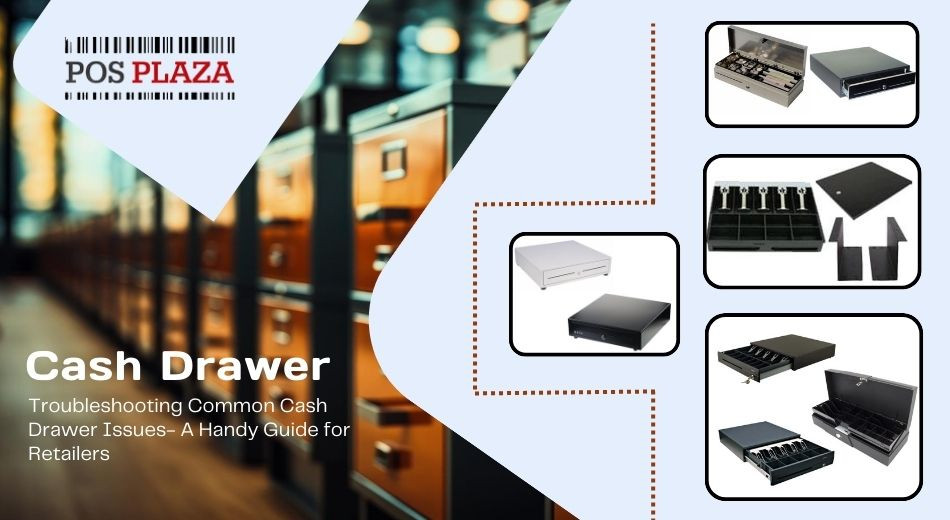
A cash drawer is one of those bits of POS hardware you never think about until it stops working, and then it stops the whole queue. The good news is that most cash drawer problems come down to a handful of causes, and you can fix the majority of them yourself in a few minutes without a service call. This guide walks through the common faults, what causes them, and exactly what to check, for both printer-driven and USB cash drawers.
First, work out how your cash drawer opens
Before you troubleshoot anything, know which type of drawer you have, because the fix is completely different.
- Printer-driven cash drawers connect to your receipt printer, not the computer. The printer sends a pulse that pops the drawer open when a receipt prints. These are the most common type in Australian retail. See our printer-driven cash drawers.
- USB cash drawers plug straight into the computer and are opened by a command from your POS software. See our USB cash drawers.
If you are not sure, follow the cable. If it runs from the drawer to the back of the receipt printer, it is printer-driven. If it runs to the computer, it is USB.
Cash drawer will not open
This is the most common problem by far. Work through it based on your drawer type.
Printer-driven drawer that will not open
- Check the cable is in the right port. The drawer cable uses a connector that looks like a phone plug (RJ11 or RJ12), and it must go into the printer's drawer-kick port, usually labelled "DK". It is easy to plug it into a network or phone port by mistake, which will never open the drawer.
- Reseat the cable at both ends. Unplug it from the printer and the drawer and push it back in until it clicks. A loose connector is a frequent cause.
- Confirm the drawer kick is enabled in the printer driver. Most receipt printers have a setting that tells them to fire the drawer when a receipt prints. If that setting is off, the receipt prints but the drawer stays shut.
- Check the voltage match. Cash drawer solenoids are commonly 12V or 24V, and the drawer has to match what your printer's port supplies. A 24V drawer on a 12V port often will not open, and the wrong combination can damage the drawer. If you have recently changed printers, this is a likely culprit.
- Test with a known-good cable. Drawer cables fail more often than the drawer itself. Swapping the cable rules it out quickly.
USB drawer that will not open
- Check the POS software setting. A USB drawer opens on a software command, so the "open drawer" action has to be enabled and pointed at the correct drawer in your POS settings.
- Confirm the driver and COM port. If your POS talks to the drawer over a virtual COM port, make sure the right port is selected and the driver is installed.
- Try a no-sale or test print. Use the manual "open drawer" function in your POS to test the drawer on its own, separate from a full sale.
Either type: try the manual release
Almost every cash drawer has a manual key or lever underneath that opens it without power. If the manual release works but the electronic open does not, the drawer itself is fine and the problem is in the cable, port, printer setting or software.
Drawer opens on its own
A drawer that pops open without a sale is usually a trigger or signal issue. Check that the drawer-kick cable is not damaged, that the printer driver is not set to fire the drawer on the wrong event, and that no other device is sharing the port. Worn trigger components inside an older drawer can also cause random openings, in which case the drawer is near the end of its life.
Drawer sticks or jams
Sticking and jamming is mechanical, and usually easy to fix.
- Clear any coins or notes that have slipped behind or under the till tray. Overfilling is a common cause.
- Clean dust and old grease off the slides and rollers, then apply a small amount of fresh lubricant so the drawer runs smoothly.
- Check the drawer is sitting square in its housing. A drawer knocked out of alignment will bind.
Drawer will not stay closed
If the drawer keeps springing back open, the latch or the alignment is the issue. Check the latch mechanism is clean and engaging, and that the drawer is seated squarely so the catch lines up. A drawer that will not lock shut is a security risk, so do not leave the till unattended until it is fixed.
Unusual noise from the drawer
Rattling, grinding or squeaking points to worn springs, rollers or hinges. A little lubricant often quiets it down. If the noise continues, parts are wearing out and the drawer will eventually fail, so it is worth pricing a replacement before it does.
Power and electrical faults
If a printer-driven drawer is completely unresponsive, confirm the receipt printer itself is powered and printing. If the printer is fine but the drawer never kicks, the fault is almost always the cable, the DK port setting or a voltage mismatch rather than the drawer. For USB drawers, test a different USB port and cable.
Repair or replace?
Cables, springs and latches are cheap and worth fixing. But if a drawer is jamming repeatedly, opening at random or making constant noise, the internal mechanism is worn and you are better off replacing it. A new drawer is an inexpensive part of a till, and the downtime from a failing one costs more.
When you replace, match the new drawer to how it will connect. For a standard receipt-printer setup choose a printer-driven drawer, for a software-controlled till choose a USB drawer, and for a tight counter, cafe or market stall a compact flip-top cash drawer takes up less space. We stock drawers from Goodson, Posiflex, SAM4S, Star Micronics and VPOS, plus cables and accessories if you just need a part.
A quick maintenance routine
A few habits prevent most of the faults above: do not overfill the till tray, wipe the slides clean and re-lubricate every few months, keep the drawer cable seated and undamaged, and lock the drawer when the till is unattended. If you are also choosing between a standalone register and a full POS, our guide on cash register vs POS system is a good next read.
Frequently asked questions
Why won't my cash drawer open when the receipt prints?
On a printer-driven drawer this is almost always the cable or a setting, not the drawer. Check the RJ11/RJ12 cable is in the printer's DK port and seated, confirm the drawer kick is enabled in the printer driver, and make sure the drawer voltage (12V or 24V) matches the printer port. Test the manual release to confirm the drawer itself works.
How does a printer-driven cash drawer work?
The drawer connects to the receipt printer with an RJ11/RJ12 cable into the DK port. When a receipt prints, the printer sends a pulse that energises a solenoid in the drawer and pops it open. The computer never talks to the drawer directly.
What is the difference between a USB and a printer-driven cash drawer?
A printer-driven drawer opens via the receipt printer. A USB drawer plugs into the computer and opens on a command from your POS software. If you do not run a compatible receipt printer, a USB drawer is the simpler option.
My cash drawer keeps jamming. What should I do?
Clear any cash stuck behind the tray, clean and lightly lubricate the slides and rollers, and make sure the drawer is sitting square in its housing. If it keeps jamming after that, the mechanism is worn and it is time to replace it.
Can I open a cash drawer without power?
Yes. Almost all cash drawers have a manual key or lever underneath that opens them without power, for end of day or in a power cut.
Need a hand or a replacement? POS Plaza stocks a full range of cash drawers with local Australian stock and same-day dispatch from Sydney. Call our team on 1300 115 808 and we will help you match a drawer to your receipt printer or POS software.